Portugal is increasingly establishing itself as one of Europe’s most strategically important economies, as international investors, entrepreneurs and multinational businesses seek stable and globally connected destinations.
While the country has long been recognised for its lifestyle, climate and safety, broader global shifts are now bringing renewed attention to Portugal’s economic positioning, infrastructure and international accessibility.
Geopolitical uncertainty, evolving supply chains and the rise of remote working have all contributed to changing patterns in global capital and talent movement. In this environment, Portugal is attracting growing interest as a gateway between Europe, the Americas and Africa.
Rogério Fernandes Ferreira, CEO of Lisbon-based RFF Lawyers and former Secretary of State of Fiscal Affairs in Portugal, believes the country’s role is evolving rapidly on the international stage.
He explains: “Portugal is no longer a peripheral country.
“When analysed through the lens of infrastructure, global trade routes, legal frameworks, and geopolitical alignment, Portugal becomes one of Europe’s most important Atlantic gateways connecting Europe, the Americas, Africa, and the Portuguese-speaking world.”

Lisbon’s position offers businesses operational overlap with both Europe and the United States, sharing the same time zone as London while also aligning with working hours in major US cities including New York and Chicago.
This strategic advantage is becoming increasingly attractive to technology firms, financial services companies and international entrepreneurs looking for a European base with transatlantic reach.
Portugal’s growing appeal is also being supported by tax incentives, investment programmes and infrastructure expansion.
Among the most significant initiatives is the Golden Visa residency-by-investment programme, which since launching in 2012 has generated an estimated €54 billion in economic impact and supported around 30,000 jobs.
Approximately 95% of Golden Visa applicants now pursue residency through the regulated investment fund route, requiring a €500,000 investment in qualifying Portuguese alternative investment funds and an average physical presence of only seven days per year.
Paul Stannard, Chairman and Founder of Portugal Pathways and Portugal Investment Owners Club, says the programme continues to play an important role in attracting international investors and globally mobile families.
He explains: “The Golden Visa has played an important role in attracting international capital, entrepreneurs, and globally mobile families into Portugal.”

However, he acknowledges that many applicants have faced frustration over immigration system delays between 2020 and 2024, particularly regarding processing and biometric appointments.
“These delays have understandably created concern over legitimate expectations around residency timelines, permanent citizenship eligibility, and the recent extension of the nationality timeline to 10 years under changes to Portuguese nationality law,” he says.
Despite these concerns, Portugal’s economic outlook continues to strengthen internationally.
The country was recently named ‘Economy of the Year’ by UK-based The Economist magazine, while Fitch Ratings continues to maintain Portugal within the A category across key sovereign credit metrics.
Alongside residency initiatives, Portugal has introduced the IFICI regime — the Tax Incentive for Scientific Research and Innovation — replacing the former Non-Habitual Resident framework.
The regime allows qualifying professionals, entrepreneurs, researchers and consultants to benefit from a flat 20% tax rate on qualifying Portuguese employment and self-employment income for up to 10 years.

In some cases, foreign-sourced passive income, including certain dividends and royalties, may also remain exempt from Portuguese taxation depending on individual circumstances and applicable double taxation treaties.
The government has also introduced favourable tax measures for younger workers, including lower income tax rates for many individuals under 35, as part of efforts to attract and retain talent.
Stannard says today’s international investors are making increasingly holistic decisions.
Adds Paul Stannard: “They are looking at operational flexibility, legal certainty, international access, quality of life, safety, education, healthcare, and long-term family planning. Portugal increasingly offers a compelling balance across all of those areas.”
Portugal’s future economic ambitions are also being reinforced through major infrastructure investments.
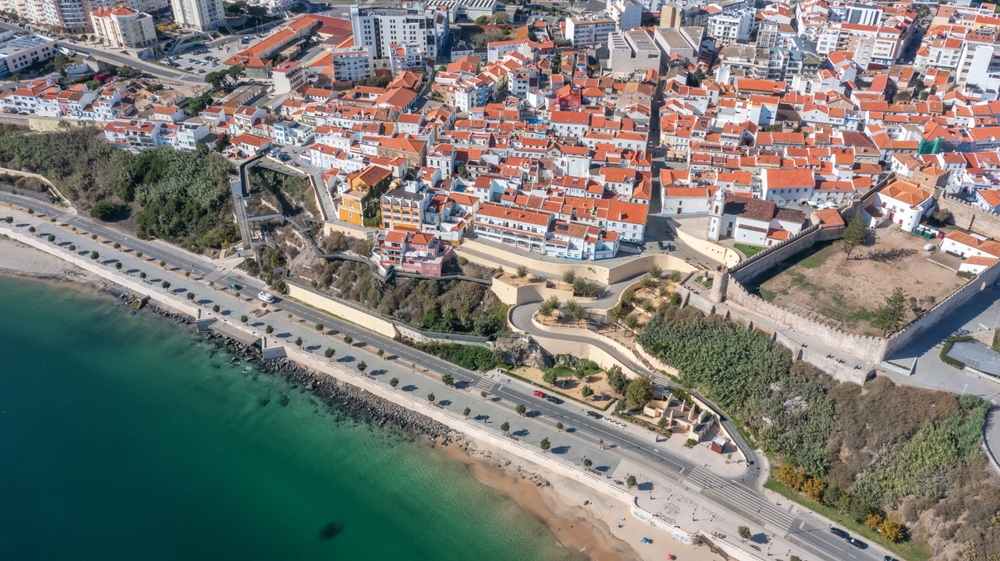
The Port of Sines is rapidly emerging as one of Europe’s most strategically important deep-water ports, positioned on Atlantic shipping routes connecting Europe, Africa and the Americas.
Meanwhile, Portugal has become a major landing point for international submarine fibre optic cables, including EllaLink and 2Africa, strengthening the country’s position as an emerging digital infrastructure hub.
These developments are already attracting international technology operators and hyperscale data centre investment.
Paul Sheedy, special adviser to the Portugal Future Fund, believes Portugal is entering a period where several major sectors are advancing simultaneously.
“Technology, media, healthcare, renewable energy, luxury hospitality, digital infrastructure, and international services are all benefiting from Portugal’s combination of political stability, international accessibility, talent, safety, and improving infrastructure,” he explains.
Portugal is also investing heavily in renewable energy projects, including offshore wind, solar energy and green hydrogen infrastructure linked to Europe’s wider decarbonisation strategy.
Projects such as the H2Med hydrogen corridor connecting Portugal, Spain and France could help position the country as a future renewable energy exporter within Europe.
Although challenges remain around productivity, exports and research investment, many analysts believe Portugal now has the foundations in place for sustained long-term growth.
As Rogério Fernandes Ferreira concludes: “Portugal already possesses the geography, institutional alignment, infrastructure, and timing.
“What remains is the strategic vision and international communication necessary to transform those advantages into sustained national growth.”
About Portugal Investment Owners Club
The Portugal Investment Owners Club, or PIO Club for short, is a unique investor membership community designed for discerning individuals, families, and organisations committed to exploring and capitalising on life in Portugal and enjoying money-can't-buy experiences and exclusive events.
About Portugal Pathways
Portugal Pathways has supported hundreds of Golden Visa residency-by-investment applications and provides expert guidance through its professional supply chain network on estate planning, wealth management, Golden Visa and tax optimisation, including post-NHR / IFICI tax regime planning, as well as private healthcare, money transfers and bespoke relocation and luxury real estate solutions to enhance life and investment in Portugal
Disclaimer: The information on the Portugal Pathways and Portugal Investment Owners Club (PIO Club for short) websites and in email communications is for general informational purposes only and should not be construed as legal, tax, or financial advice. You should consult and check with a qualified professional advisor before relying on any information provided on this website or in email communications. As it relates to investments in Golden Visas or other wealth management solutions offered by regulated and professional advisors, it is important to note that past performance is no guarantee of future returns. Private equities can be highly illiquid and come with risk and should always be under professional independent advice. Golden Visa investments need to be held for 6 to 7 years to allow for permanent citizenship/passport in the EU.